



Our Emissions Reduction Targets
Scope 1 & Scope 2 Emissions
50% reduction by 2034 from our 2014 baseline
Scope 3
Emissions
28% reduction by 2034 from our 2022 baseline
Renewable Electricity
100% renewable electricity procured by all manufacturing sites by 2030
2025 Performance
- Energy Use
- Greenhouse Gas Emissions
- Air Emissions
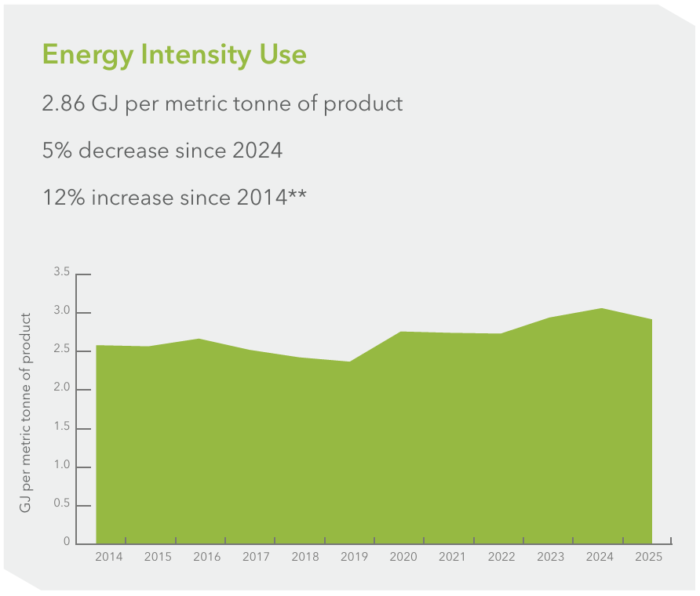
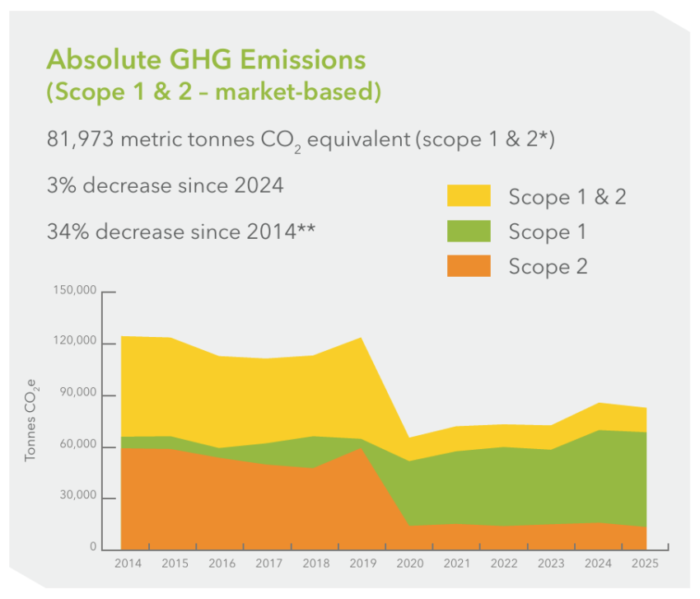
Our target to procure 100% renewable electricity at all manufacturing sites by 2030 was first achieved in 2024 and maintained in 2025, resulting in zero scope 2 emissions from purchased electricity. In total, procured and on‑site renewable electricity, now accounts for 19% of our total energy mix.
Overall, absolute scope 1 emissions decreased by 1% compared with 2024 and increased by 5% since 2014. Absolute scope 2 market‑based emissions decreased by 11% compared with 2024 and 77% since 2014.
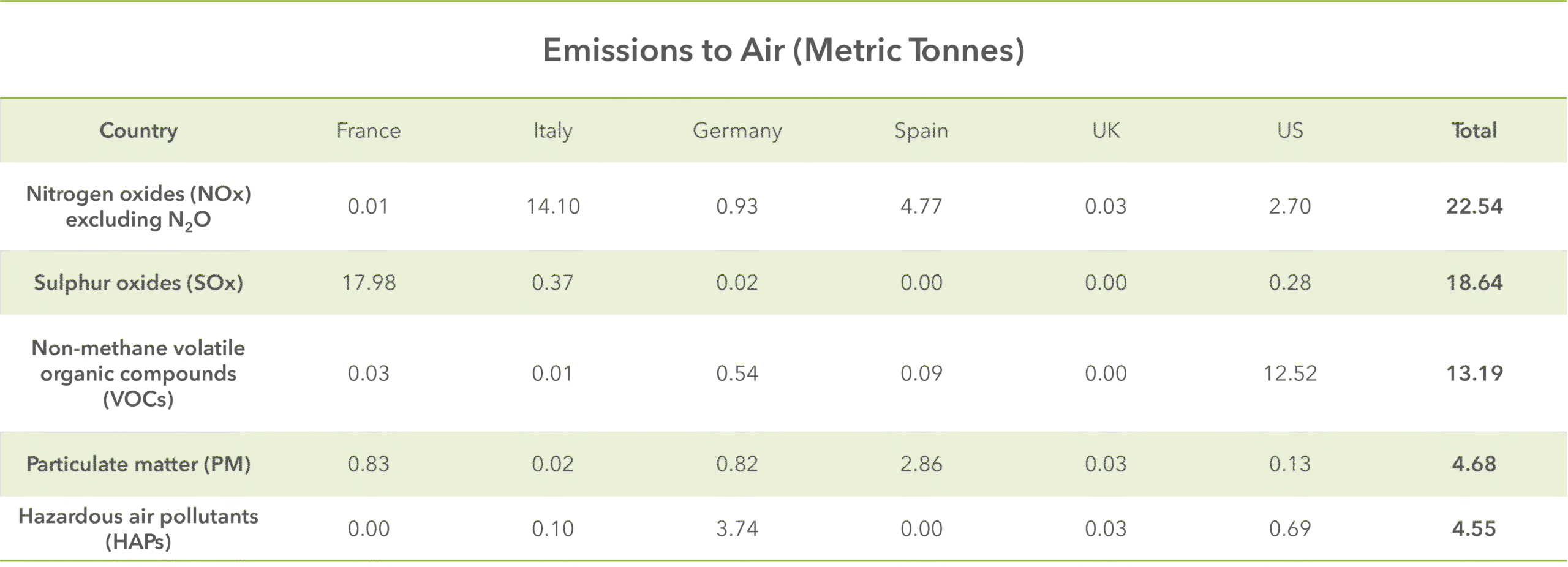
Note: Our Salisbury, Chemsil, Midland, Oklahoma, and Pleasanton sites are not required to monitor gaseous emissions.
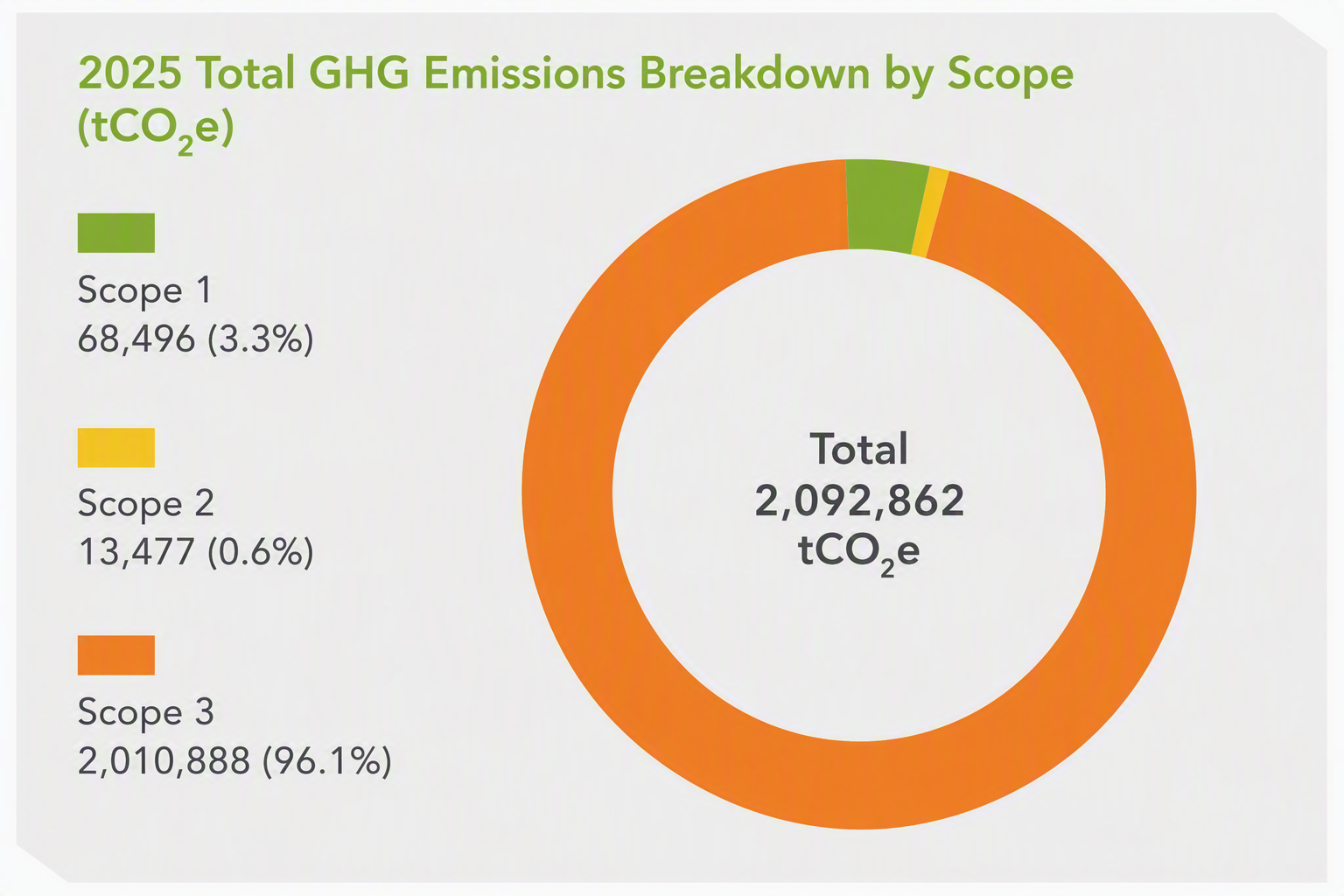
Global Carbon Footprint
For our 2025 reporting period, our combined GHG emissions were 2,092,862 tCO2e. Scope 3 emissions accounted for 96.1%, scope 1 for 3.3% and scope 2 for 0.6% of our total emissions.
We complete an annual assessment of our global scope 3 emissions. This assessment includes 11 applicable scope 3 categories and is in line with the World Resources Institute GHG Protocol and industry best practice. The remaining four categories are excluded on the basis that they are either not applicable or not required. Over time we have improved our calculation methodology and output by acquiring consumption data for all global reporting units and refining the accuracy of emission factors used for raw materials, product use and disposal calculations, while using primary data where available.
Resource Reduction Group
| Energy saving (MWh) | Scope 1 and 2 emissions saving
(MT CO₂e) | Investment (US$) | |
|---|---|---|---|
| 2025 | 3,745 | 569 | 735,947 |
- Ellesmere Port, UK
- Herne, Germany
- Castiglione, Italy
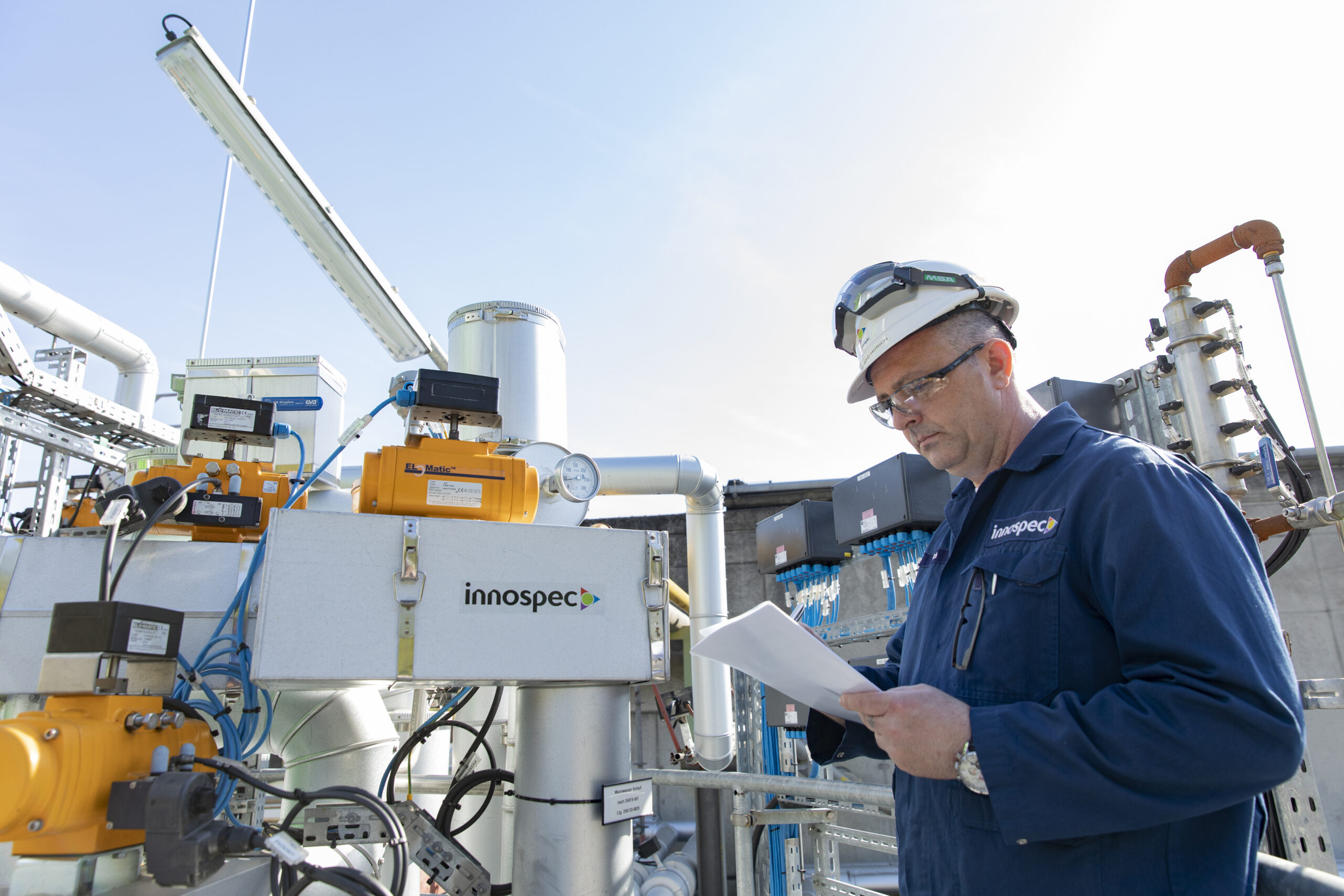
Hot Water System Upgrade at Herne, Germany
At our Herne site in Germany, we improved energy efficiency by replacing a centralized warm water tank with three local electric heaters. This decentralized approach reduces heat losses associated with storage and distribution, ensuring hot water is generated only where and when it is needed.
By eliminating inefficient fuel use in the central system and improving overall energy utilization, this project is expected to deliver an annual scope 1 emissions reduction of approximately 1.6 tonnes CO₂e, while also enhancing operational efficiency.
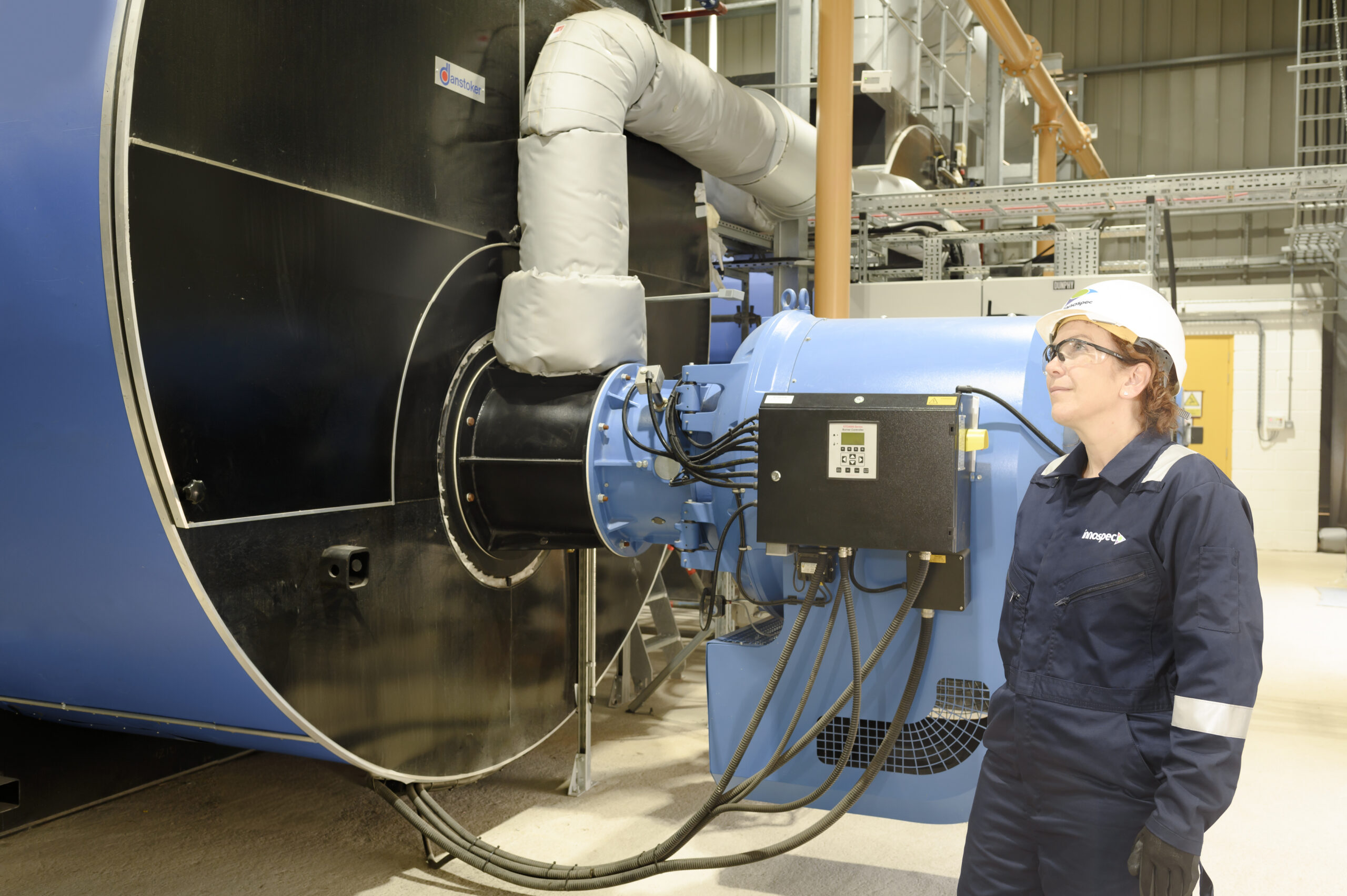
New Combined Heat and Power plant at Ellesmere Port, UK
In 2024, our Ellesmere Port, UK, site installed a new Combined Heat and Power (CHP) plant. In 2025, it supplied most of the site’s electricity and approximately 78% of steam demand. The legacy boiler also continued to operate in parallel during this time providing hot water and the remaining steam but at reduced demand. This reduced demand helped lower natural gas consumption and associated scope 1 GHG emissions.
In 2026, the CHP plant is expected to supply 100% of the site’s steam demand, supported by the commissioning of a new high‑pressure hot water (HPHW) plant. This will enable the legacy boiler to be fully shut down, further reducing scope 1 emissions. Although initially powered by natural gas, the CHP system has been designed to operate on a 20% hydrogen blend in the medium term and is capable of conversion to 100% hydrogen when supply becomes available.
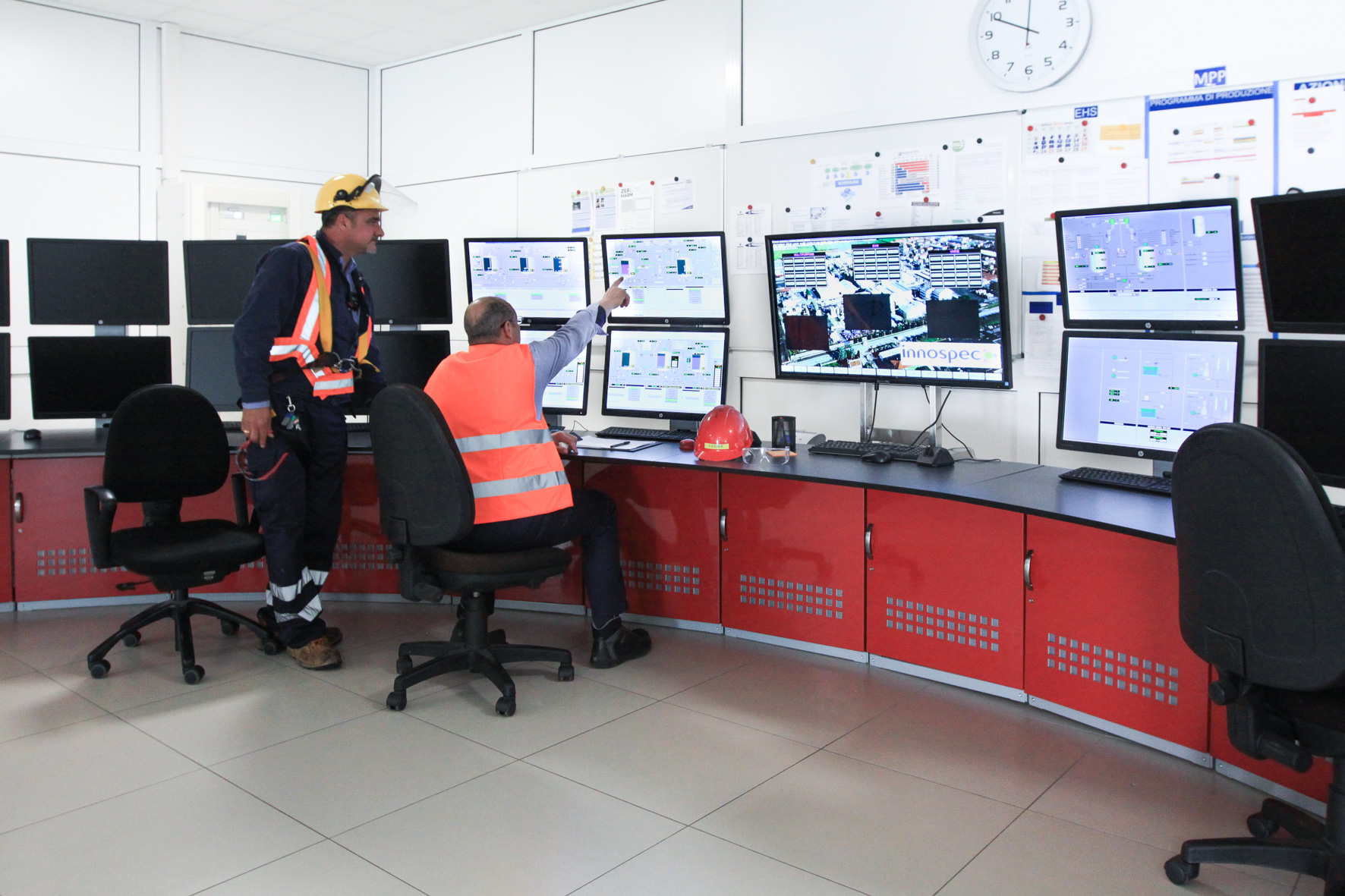
Compressed Air and Cooling Optimization at Castiglione, Italy
At our Castiglione site in Italy, we have delivered a series of targeted efficiency improvements across our compressed air and cooling systems. This included installing pressure holding vessels within the compressed air network to reduce demand peaks and stabilize compressor load, alongside upgrading a key distribution line to improve flow efficiency.
These changes reduce energy waste by smoothing power consumption and minimizing pressure losses, lowering the electricity required to operate the system. In addition, a variable speed drive (VSD) was installed on the south cooling tower pump, enabling it to adjust output in line with demand rather than operating continuously at full capacity.
Together, these initiatives are expected to deliver annual savings of approximately 49 tonnes CO₂e, while improving system reliability and overall energy performance.
- Midland, US
- St Mihiel, France
- Leuna, Germany
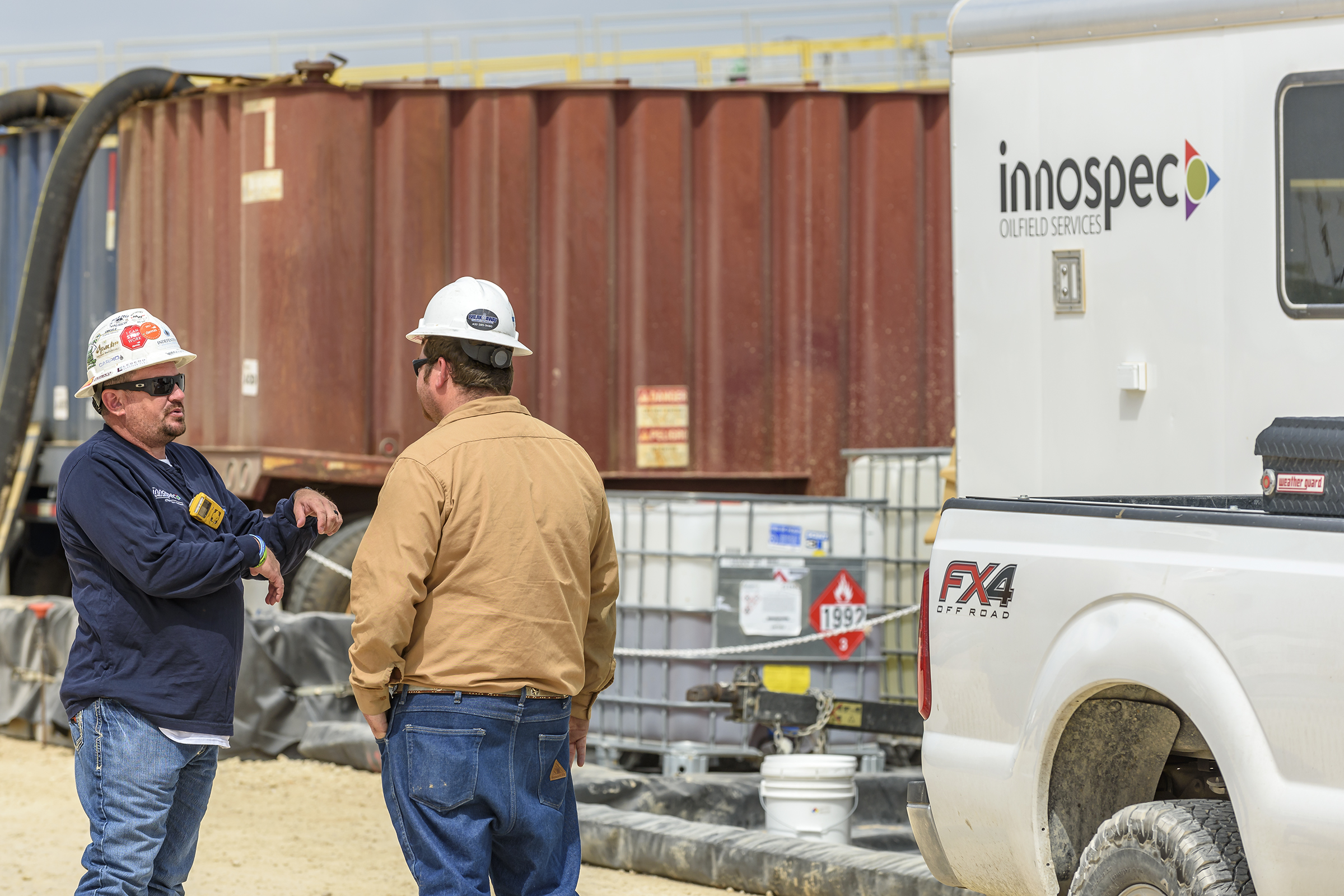
Replacing our Diesel-Powered Air Compressors in Midland, US
At our site in Midland, US we replaced our diesel-powered air compressor with a more energy-efficient electric model to reduce energy consumption, maintenance costs, and reliance on fossil fuels. Modern electric compressors are more efficient, recover waste heat, and eliminate the need for diesel fuel, resulting in a smaller environmental footprint. This will result in a saving of 322,000 kWh per year, equating to 83 tonnes CO₂e.
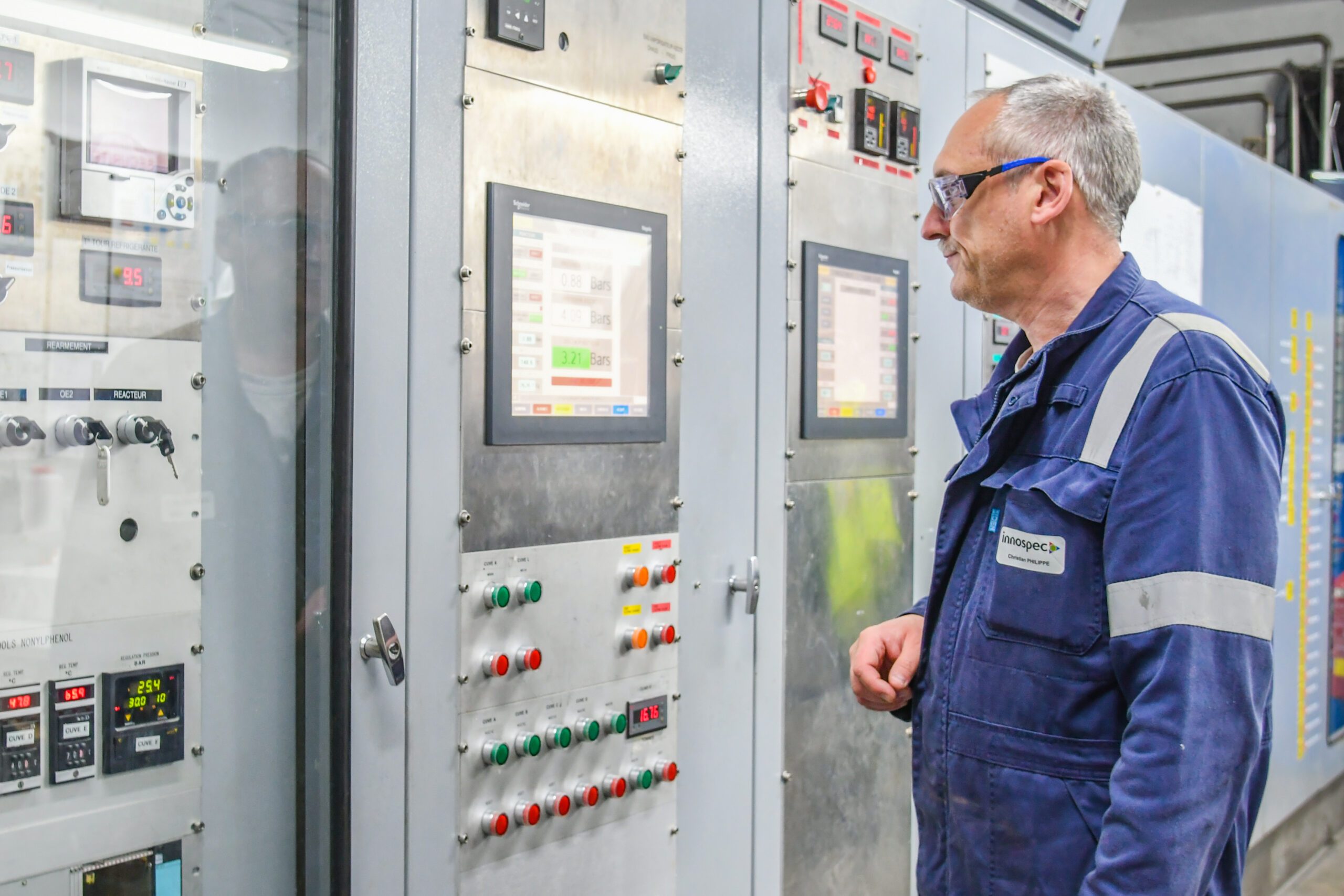
Steam Trap Modernization at St Mihiel, France
At our St Mihiel site in France, we upgraded 30 steam traps to modern, high-efficiency units, improving the performance of our steam system. Older steam traps can leak or fail, allowing valuable steam to escape and increasing energy demand.
By reducing steam losses and improving condensate management, this project lowers the amount of fuel required to generate steam, directly reducing greenhouse gas emissions. The upgrade is expected to deliver annual savings of 547.9 tonnes CO₂e, while also enhancing system reliability and operational efficiency.
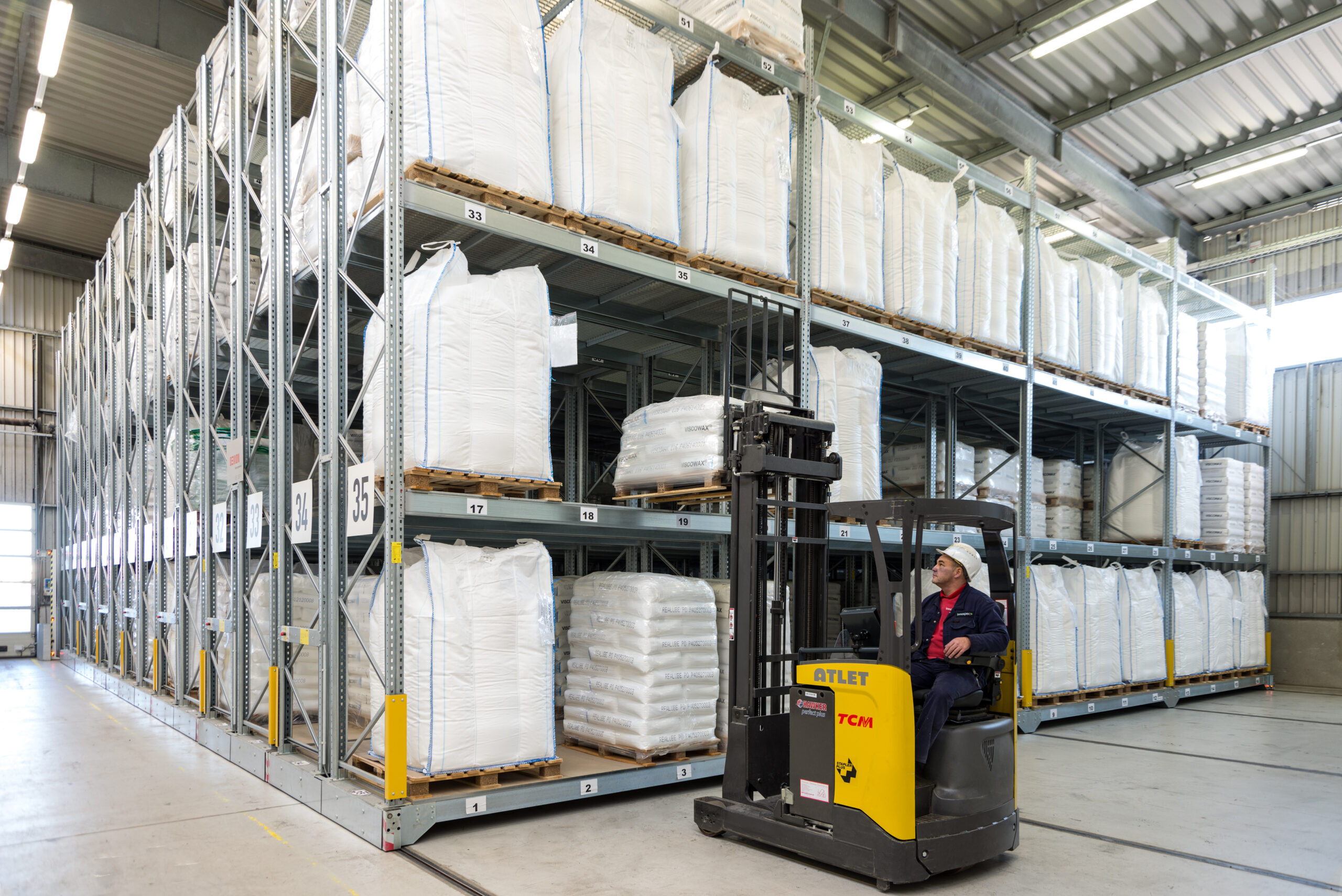
Steam Trap Optimization in Leuna, Germany
Our site in Leuna identified the opportunity to save 142,275 kWh of electricity per year, or 25.6 tonnes CO₂e, by checking and replacing faulty steam traps. This is crucial for energy conservation in manufacturing as it prevents steam loss, improves process efficiency, and reduces operational costs. Leaking or malfunctioning steam traps allow valuable steam to escape, leading to wasted energy and increased operational expenses.
Fleet emissions and fuel efficiency
We continue to optimize the size and deployment of our fleet to ensure it is fit for purpose. By strengthening collaboration between Transportation and Operations teams, we are streamlining vehicle use, increasing the adoption of bulk deliveries by our customers, and improving route planning.
In 2025, this targeted approach enabled us to reduce our overall fleet size by 4.6%, while maintaining service levels and responsiveness.
We are implementing a targeted program to replace vehicles with newer, more efficient models. This helps improve fuel performance while maintaining operational reliability.
In 2025, upgrades to light-duty and bulk delivery vehicles reduced the average fleet age by 5.6%, with 92% of vehicles now five years old or newer. These improvements contributed to a 2.4% increase in fuel economy compared to 2024.
We also continue to use our multifunctional diesel additive, ECOCLEAN® 4270, which supports engine performance, improves fuel efficiency, and reduces the frequency of particulate filter regeneration.
Digital technologies are helping us manage our fleet more efficiently. Expanded use of vehicle telematics enables us to monitor idling, optimize routing, and access real-time engine data to support more proactive decision-making.
In addition, remote tank-level monitoring reduces unnecessary site visits, helping to lower mileage and associated emissions.
| Fleet metric | 2025 | 2024 |
|---|---|---|
| Total fleet fuel consumption (gallons) | 926,763 | 902,885 |
| Renewable fuel consumption (%) | 0.03 | 0.07 |